본문 바로가기 주메뉴 바로가기
국회도서관 홈으로 정보검색 소장정보 검색

목차보기

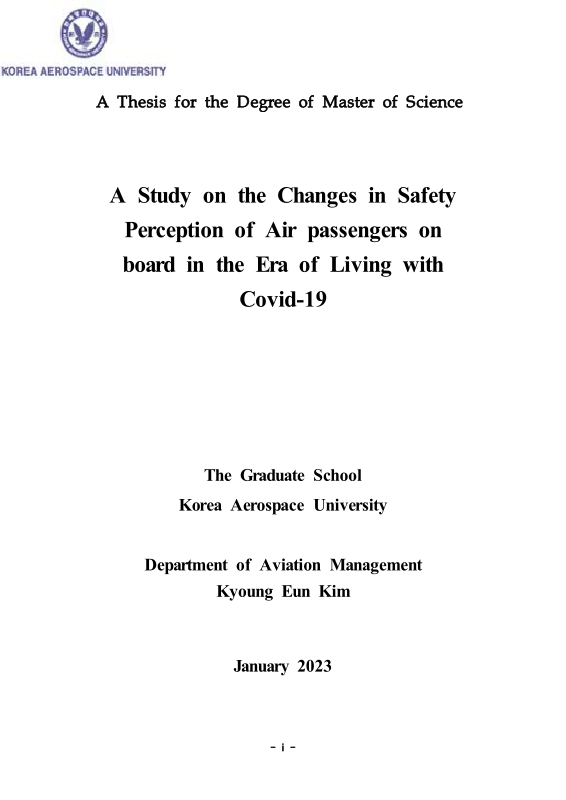
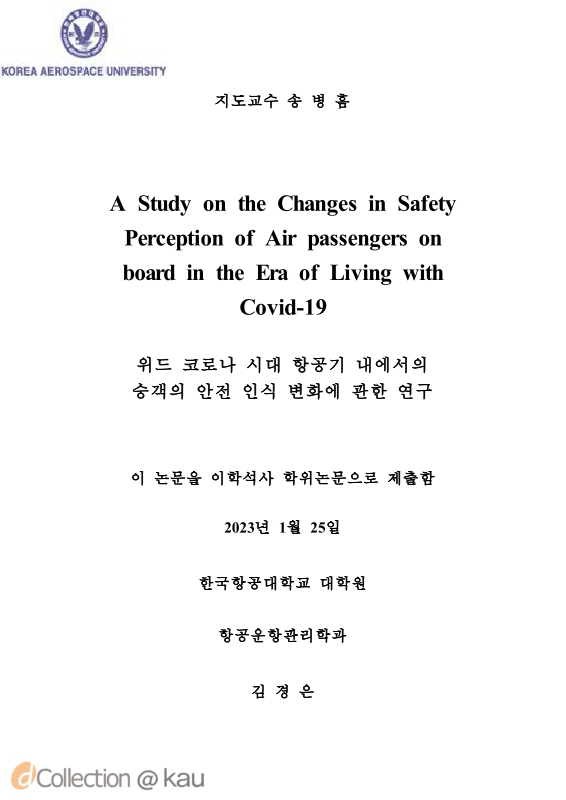
Title Page

SUMMARY

Contents

CHAPTER 1. INTRODUCTION 16

1.1. Research Background and Purpose 16

1.1.1. Research Background 16

1.1.2. Research purpose 19

1.2. Research composition and methodology 20

1.2.1. Research composition 20

1.2.2. Research methodology 21

CHAPTER 2. LITERATURE REVIEW AND THEORETICAL DISCUSSION 23

2.1. New Normal in Aviation 23

2.2. The Definition and Previous Studies 25

2.2.1. In-flight service 25

2.2.2. Cognitive value(Safety awareness of sanitation and preventative measures against Virus) 26

2.2.3. Rapport 27

2.2.4. Customer satisfaction 28

2.2.5. Loyalty 30

2.2.6. Safety 30

2.2.7. Reliability 31

2.2.8. Risk perception 32

2.2.9. Collective-efficacy 33

CHAPTER 3. RESEARCH PROCEDURE 34

3.1. Research Model 34

3.2. Research Hypothesis 35

3.3. Operational Definitions of Variables 39

3.3.1. Operational Definitions of In-flight Service 39

3.3.2. Operational Definitions of Cognitive Value 39

3.3.3. Operational Definitions of Rapport 40

3.3.4. Operational Definitions of Customer Satisfaction 40

3.3.5. Operational Definitions of Reliability 41

3.3.6. Operational Definitions of Safety 41

3.3.7. Operational Definitions of Loyalty 42

3.3.8. Operational Definitions of Risk Perception 42

3.3.9. Operational Definitions of Collective Efficacy 43

3.4. Composition of Questionnaire 43

3.4.1. Research Subjects and Data Collection Methods 44

3.5. Data Analysis Method 44

CHAPTER 4. EMPIRICAL ANALYSIS 46

4.1. Demographic Characteristics of Sample 46

4.2. Testing Validity and Reliability of Measurement Tools 49

4.2.1. Testing Validity and Reliability of In-flight service 49

4.2.2. Testing Validity and Reliability of Cognitive Value 51

4.2.3. Testing Validity and Reliability of Rapport 52

4.2.4. Testing Validity and Reliability of Customer Satisfaction 53

4.2.5. Testing Validity and Reliability of Reliability 54

4.2.6. Testing Validity and Reliability of Safety 55

4.2.7. Testing Validity and Reliability of Collective-Efficacy 56

4.2.8. Testing Validity and Reliability of Loyalty 57

4.2.9. Testing Validity and Reliability of Risk Perception 58

4.3. Descriptive Statistical Analysis 59

4.3.1. In-flight Service 59

4.3.2. cognitive value 64

4.3.3. Rapport 66

4.3.4. customer satisfaction 68

4.3.5. Reliability 71

4.3.6. Safety 74

4.3.7. collective efficacy 77

4.3.8. Loyalty 80

4.3.9. Risk perception 83

4.4. Correlation Analysis 86

4.5. Hypothesis testing 89

CHAPTER 5. INTERPRETATION 111

CHAPTER 6. CONCLUSION 113

REFERENCES 117

설문지 133

국문 초록 143

List of Tables

〈Table 1〉 Demographic information of air passengers 48

〈Table 2〉 Testing Validity and Reliability In-flight services 50

〈Table 3〉 Testing validity and reliability of cognitive value 52

〈Table 4〉 Testing validity and reliability of Rapport 53

〈Table 5〉 Testing validity and reliability of customer satisfaction 54

〈Table 6〉 Testing validity and reliability of reliability 55

〈Table 7〉 Testing validity and reliability of safety 56

〈Table 8〉 Testing validity and reliability of collective efficacy 57

〈Table 9〉 Testing validity and reliability of Loyalty 58

〈Table 10〉 Testing validity and reliability of risk perception 59

〈Table 11〉 The overall in-flight service 60

〈Table 12〉 Differences in In-flight service according to demographic characteristics 62

〈Table 13〉 The overall cognitive value 64

〈Table 14〉 Differences in Cognitive value according to demographic characteristics 65

〈Table 15〉 The overall Rapport 66

〈Table 16〉 Differences in Rapport according to demographic characteristics 67

〈Table 17〉 The overall satisfaction 68

〈Table 18〉 Differences is customer satisfaction according to demographic characteristics 70

〈Table 19〉 The overall reliability 71

〈Table 20〉 Differences in reliability according to demographic characteristics 73

〈Table 21〉 The overall safety 74

〈Table 22〉 Differences is safety according to demographic characteristics 76

〈Table 23〉 The overall collective efficacy 77

〈Table 24〉 Differences in collective efficacy according to demographic characteristics 79

〈Table 25〉 The overall loyalty 80

〈Table 26〉 Differences in Loyalty according to demographic characteristics 82

〈Table 27〉 The overall risk perception 83

〈Table 28〉 Differences in Risk perception according to demographic characteristics 85

〈Table 29〉 Correlation verification 88

〈Table 30〉 The effect of aircraft in-flight services on cognitive value 90

〈Table 31〉 The effect of aircraft in-flight services on Rapport 91

〈Table 32〉 The effect of aircraft in-flight services on customer satisfaction 92

〈Table 33〉 The effect of aircraft in-flight services on Reliability 93

〈Table 34〉 The effect of aircraft in-flight services on Safety 95

〈Table 35〉 The effect of aircraft in-flight services on collective efficacy 96

〈Table 36〉 The effect of aircraft in-flight services on loyalty 97

〈Table 37〉 The effect of aircraft in-flight services on Risk perception 98

〈Table 38〉 The effect of cognitive value on Customer satisfaction 99

〈Table 39〉 The effect of Cognitive value on Reliability 100

〈Table 40〉 The effect of Cognitive value on Safety 101

〈Table 41〉 The effect of Cognitive value on Collective efficacy 101

〈Table 42〉 The effect of Cognitive value on Loyalty 102

〈Table 43〉 The effect of Cognitive value on Risk perception 103

〈Table 44〉 The effect of Rapport on Customer Satisfaction 104

〈Table 45〉 The effect of Rapport on Reliability 104

〈Table 46〉 The effect of Rapport on Safety 105

〈Table 47〉 The effect of Rapport on Collective efficacy 106

〈Table 48〉 The effect of Rapport on Loyalty 106

〈Table 49〉 The effect of Rapport on Risk Perception 107

〈Table 50〉 Summary of hypothesis verification results 109

List of Figures

〈Fig 1〉 Research flow 22

〈Fig 2〉 Research Model 35

초록보기

한국 정부가 2021년 11월 1일부터 단계적 일상회복을 의미하는 '위드 코로나 시대'(보건복지부)로의 전환을 공식 선언했다. 정책과 전문가 중심이었던 초기 방역체계에서 각 분야 개인의 역할과 노력이 더욱 중요해지는 위드 코로나 시대 체제로의 전환이 진행 중이다. 본 연구는 코로나19 발생 이후 변화된 기내 서비스를 바탕으로 항공 이용 승객의 안전인식이 어떻게 변화하였는지, 또한 바이러스에 대한 인지 가치와 라포, 고객 만족, 신뢰성, 안전성, 충성도, 위험 인지와 집단 효능감과의 관계를 조사함으로써 세부적인 인식 변화 분석에 목적을 두었다. 코로나19 발생 이후 일정 기간이 경과함에 따라 정보가 축적되고 사회시스템이 변화함에 따라 대중들의 감염병 대응 방식과 태도에도 분명한 차이가 있을 것으로 판단해 2021년 이후 항공기에 탑승한 총 304명을 대상으로 설문조사를 실시하였으며 SPSS 21.0을 통해 각 변수에 대한 승객의 반응 데이터를 분석하였다. 그 결과, 코로나19 발생 이전 항공 안전인식에 영향을 미치는 요인은 항공기 사고, 테러 등 다소 간접적인 것이 주를 이루었으나, 전레없는 팬데믹을 겪으며 바이러스와 관련된 직접적요인도 추가된 것으로 판단된다. 따라서 기내서비스에 대한 전반적인 평가에서도 위생과 방역은 승객들에게 중요한 덕목이 되었으며 또한 자신뿐만 아니라 타인과 사회 전반의 안전을 확보하기 위한 노력과 태도 변화를 통해 승객들의 안전에 대한 인식이 크게 증진되고 성숙해진 것으로 나타났다.