 학술연구정보서비스(KERIS)
권호기사보기
| 기사명 | 저자명 | 페이지 | 원문 | 기사목차 |
|---|
| 대표형(전거형, Authority) | 생물정보 | 이형(異形, Variant) | 소속 | 직위 | 직업 | 활동분야 | 주기 | 서지 | |
|---|---|---|---|---|---|---|---|---|---|
| 연구/단체명을 입력해주세요. | |||||||||
|
|
|
|
|
|
* 주제를 선택하시면 검색 상세로 이동합니다.
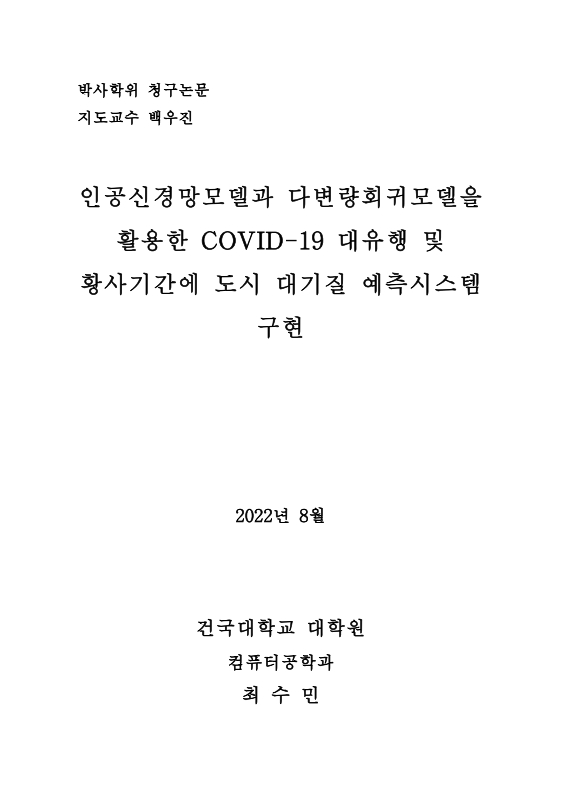
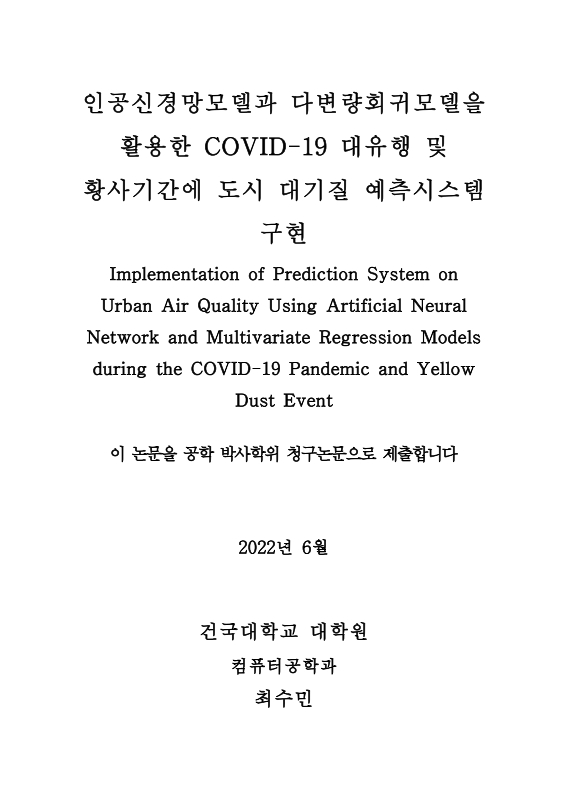
표제지
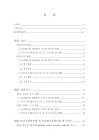
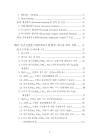
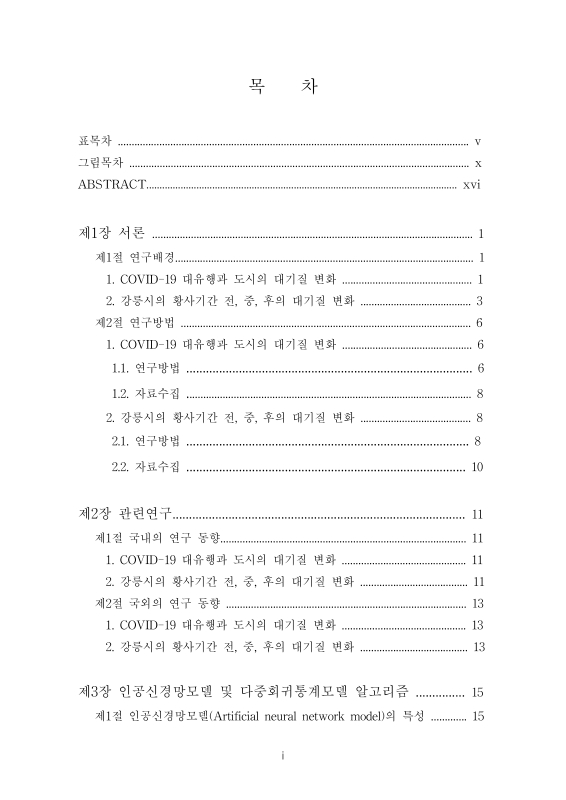
목차
ABSTRACT 19
제1장 서론 22
제1절 연구배경 22
1. COVID-19 대유행과 도시의 대기질 변화 22
2. 강릉시의 황사기간 전, 중, 후의 대기질 변화 24
제2절 연구방법 27
1. COVID-19 대유행과 도시의 대기질 변화 27
2. 강릉시의 황사기간 전, 중, 후의 강릉에서 대기질 변화 29
제2장 관련연구 32
제1절 국내의 연구동향 32
1. COVID-19 대유행과 도시의 대기질 변화 32
2. 강릉시의 황사기간 전, 중, 후의 대기질 변화 32
제2절 국외의 연구 동향 34
1. COVID-19 대유행과 도시의 대기질 변화 34
2. 강릉시의 황사기간 전, 중, 후의 대기질 변화 34
제3장 인공신경망모델 및 다중회귀통계모델 알고리즘 36
제1절 인공신경망모델 (Artificial neural network)의 특성 36
1. Machine learning 36
2. Deep learning 36
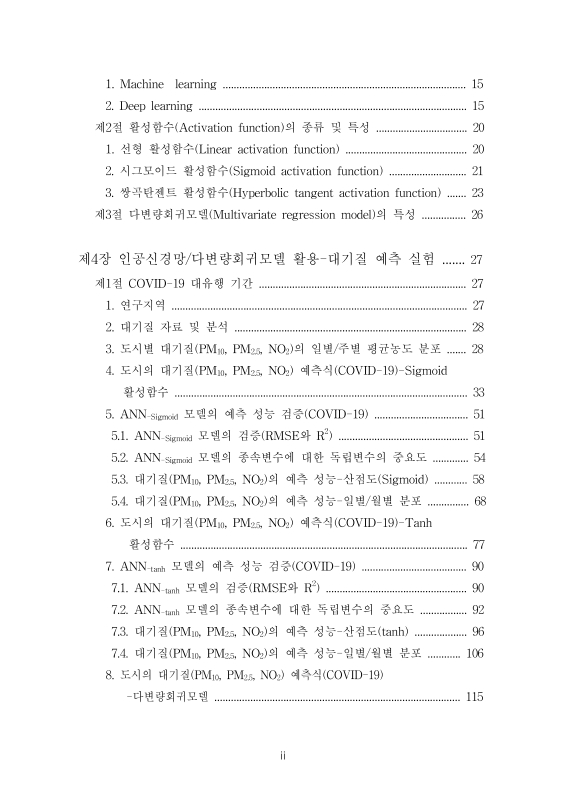
제2절 활성함수(Activation function)의 종류 및 특성 41
1. 선형 활성함수(Linear activation function) 41
2. 시그모이드 활성함수(Sigmoid activation function) 42
3. 쌍곡탄젠트함수(Hyperbolic tangent activation function; tanh) 44
제3절 다변량회귀모델 (Multivariate regression model) 특성 47
제4장 인공신경망 /다중회귀모델 활용 대기질 예측 실험 48
제1절 COVID-19 대유행 기간 48
1. 연구지역 48
2. 대기질 자료 및 분석 49
3. 도시별 대기질(PM10, PM2.5, NO₂)의 일별/주별 평균농도 변화[이미지참조] 49
4. 도시의 대기질 (PM10, PM2.5, NO₂) 예측식(COVID-19)-Sigmoid 활성함수[이미지참조] 54
5. ANN-Sigmoid 모델의 예측 성능 검증(COVID-19)[이미지참조] 72
6. 도시의 대기질(PM10, PM2.5, NO₂) 예측식(COVID-19)-Tanh 활성함수[이미지참조] 98
7. ANN-tanh 모델의 예측 성능 검증(COVID-19)[이미지참조] 111
8. 도시의 대기질(PM10, PM2.5, NO₂) 예측식(COVID-19)-다변량회귀모델[이미지참조] 136
9. 다변량회귀모델의 예측 성능 검증(COVID-19) 138
제2절 황사기간 151
1. 연구지역 151
2. 대기질 자료 및 분석 152
3. 황사의 이동 및 확산 지역 154
4. 매 시각별 PM, 기상, 대기오염농도 분포 156
5. 강릉의 대기질(PM10, PM2.5, NO₂) 예측식(황사)-Sigmoid 활성함수[이미지참조] 163
6. ANN-Sigmoid 모델의 검증(황사)[이미지참조] 180
7. 강릉의 대기질(PM10, PM2.5, NO₂) 예측식(황사)-tanh 활성함수[이미지참조] 207
8. ANN-tanh 모델의 예측 성능 검증(황사)[이미지참조] 220
9. 강릉의 대기질(PM10, PM2.5, NO₂) 예측식(황사)-다변량회귀모델[이미지참조] 248
10. 다변량회귀모델의 예측 성능 검증(황사) 249
제5장 결론과 제안 270
제1절 결론 270
1. COVID-19 대유행과 도시의 대기질 변화 270
2. 강릉시의 황사기간 전, 중, 후의 대기질 변화 271
제2절 제안 273
1. COVID-19 대유행과 도시의 대기질 변화 273
2. 강릉시의 황사기간 전, 중, 후의 대기질 변화 274
참고문헌 276
국문초록 288
Figure 1. Machine learning algorithm 36
Figure 2. Neural structure and single layer perceptron 37
Figure 3. Multiple layer perceptron-machine and deep learning algorithm 39
Figure 4. Feedforward shallow artificial neural network(ANN) 39
Figure 5. Feedforward deep artificial neural network 40
Figure 6. Linear activation function 42
Figure 7. Sigmoid activation function with restricted inputs(yellow-gradient) 43
Figure 8. Artificial neural network: Back- and forward-propagation 43
Figure 9. Hyperbolic tangent activation function 45
Figure 10. ReLU(Rectified linear unit activation function) 46
Figure 11. LReLU(Leaky rectified linear unit activation function) 46
Figure 12. Location of Seoul(S), Busan(B), Gwangju(G) in Korea 48
Figure 13-1. Daily/weekly mean of PM10(μg/m³), PM2.5(μg/m³), NO₂(ppm x 1000) at Seoul(2019~2020)[이미지참조] 50
Figure 13-2. As shown in Fig. 13-1, except for Busan(2019~2020) 51
Figure 13-3. As shown in Fig. 13-1, except for Gwangju(2019~2020) 52
Figure 14. Feedforward artificial Neural Network-17 nodes 56
Figure 15-1. Scattered plot(ANN-Sigmoid, No=15, 17, 19), PM10-S, Seoul, 2020[이미지참조] 80
Figure 15-2. As shown in Fig. 15-1, except for PM2.5-S, 2020[이미지참조] 81
Figure 15-3. As shown in Fig. 15-1, except for NO2-S, 2020[이미지참조] 82
Figure 16-1. Scattered plot(ANN-Sigmoid, No=15, 17, 19), PM10-B, Busan, 2020[이미지참조] 83
Figure 16-2. As shown in Fig. 16-1, except for PM2.5-B, 2020[이미지참조] 84
Figure 16-3. As shown in Fig. 16-1, except for NO2-B, 2020)[이미지참조] 85
Figure 17-1. Scattered plot(ANN-Sigmoid, No=15, 17, 19), PM10-G, Gwangju, 2020[이미지참조] 86
Figure 17-2. As shown in Fig. 17-1, except for PM2.5-G, 2020[이미지참조] 87
Figure 17-3. As shown in Fig. 17-1, except for NO2-G, 2020[이미지참조] 88
Figure 18-1. Comparison of daily/monthly observed and predicted PM10-S(ANN-Sigmoid), Seoul, 2020[이미지참조] 89
Figure 18-2. As shown in Fig. 18-1, except for PM2.5-S, 2020[이미지참조] 90
Figure 18-3. As shown in Fig. 18-1, except for NO2-S, 2020[이미지참조] 91
Figure 19-1. Comparison of daily/monthly observed and predicted PM10-B(ANN-Sigmoid), Busan, 2020[이미지참조] 92
Figure 19-2. As shown in Fig. 19-1, except for PM2.5-B, 2020[이미지참조] 93
Figure 19-3. As showm in Fig. 19-1, except for NO2-B, 2020[이미지참조] 94
Figure 20-1. Comparison of daily/monthly observed and predicted PM10-G(ANN-Sigmoid), Gwangju, 2020[이미지참조] 95
Figure 20-2. As shown in Fig. 20-1, except for PM2.5-G, 2020[이미지참조] 96
Figure 20-3. As shown in Fig. 20-1, except for NO2-G, 2020[이미지참조] 97
Figure 21-1. Scattered plot(ANN-tanh, No=15, 17, 19), PM10-S, Seoul, 2020[이미지참조] 118
Figure 21-2. As shown in Fig. 21-1, except for PM2.5-S, 2020[이미지참조] 119
Figure 21-3. As shown in Fig. 21-1, except for NO2-S, 2020[이미지참조] 120
Figure 22-1. Scattered plot(ANN-tanh, No=15, 17, 19), PM10-B, Busan, 2020[이미지참조] 121
Figure 22-2. As shown in Fig. 22-1, except for PM2.5-B, 2020[이미지참조] 122
Figure 22-3. As shown in Fig. 22-1, except for NO2-B, 2020[이미지참조] 123
Figure 23-1. Scattered plot(ANN-tanh, No=15, 17, 19), PM10-G, Gwangju, 2020[이미지참조] 124
Figure 23-2. As shown in Fig. 23-1, except for PM2.5-G, 2020[이미지참조] 125
Figure 23-3. As shown in Fig. 23-1, except for NO2-G, 2020[이미지참조] 126
Figure 24-1. Comparison of daily/monthly observed and predicted PM10-S(ANN-tanh), Seoul, 2020[이미지참조] 127
Figure 24-2. As shown in Fig, 24-1, except for PM2.5-S, 2020[이미지참조] 128
Figure 24-3. As shown in Fig, 24-1, except for NO2-S, 2020[이미지참조] 129
Figure 25-1. Comparison of daily/monthly observed and predicted PM10-B(ANN-tanh), Busan, 2020[이미지참조] 130
Figure 25-2. As shown in Fig. 25-1, except for PM2.5-B, 2020[이미지참조] 131
Figure 25-3. As shown in Fig. 25-1, except for NO2-B, 2020[이미지참조] 132
Figure 26-1. Comparison of daily/monthly observed and predicted PM10-G(ANN-tanh), Gwangju, 2020[이미지참조] 133
Figure 26-2. As shown in Fig. 26-1, except for PM2.5-G, 2020[이미지참조] 134
Figure 26-3. As shown in Fig. 26-1, except for NO2-G, 2020[이미지참조] 135
Figure 27-1. Comparison of daily/monthly observed and predicted PM10-S, PM2.5-S and NO2-S by Multivariate regression, Seoul, 2020[이미지참조] 145
Figure 27-2. As shown in Fig. 27-1, except for Busan, 2020 146
Figure 27-3. As shown in Fig. 27-1, except for Gwangju, 2020 147
Figure 28. Northeastern Asia-Gobi Desert, Beijing(B, China) and Gangneung(G, Korea) 151
Figure 29-1. COMS satellite image with dust cloud at 15 LST, March 20, 2015, Gangneung before the Yellow Dust event 155
Figure 29-2. As shown in Fig. 29-1, except for 21 LST, March 21, 2015, Gangneung during the Yellow Dust event 155
Figure 30. Hourly distribution of PM10, PM2.5 and PM₁ concentrations(μg/m³) at Gangneung from March 18 to March 27, 2015[이미지참조] 157
Figure 31. Hourly distribution of PM10 and PM2.5 concentrations(μg/m³) at Beijing, China from March 16 to March 25, 2015[이미지참조] 157
Figure 32. Hourly distributions of air temperature(℃)(a), wind speed(m/s)(b), and relative humidity(%)(c) at Gangneung, 2015 158
Figure 33. Hourly distributions of SO₂(x 1,000), CO(x 100), O₃(x 1,000), and NO₂(x 1,000; NOx = NO₂ + O₃) concentrations(ppm) at...[이미지참조] 159
Figure 34. Hourly distributions of SO₂(x 1,000), CO(x 100), O₃(x 1,000), and NO₂(x 1,000) concentrations(ppm) at Beijing, China, 2015 160
Figure 35. Feedforward artificial neural network-Node=15 166
Figure 36-1. Scattered plot of PM10-G (ANN-sigmoid, No=13, 15, 17) at Gangneung, before the Yellow Dust event, 2015[이미지참조] 188
Figure 36-2. As shown in Fig. 36-1, except for PM2.5-G, 2015[이미지참조] 189
Figure 36-3. As shown in Fig. 36-1, except for NO2-G, 2015[이미지참조] 190
Figure 37-1. Scattered plot of PM10-G (ANN-sigmoid, No=13, 15, 17) at Gangneung, during the Yellow Dust event, 2015[이미지참조] 191
Figure 37-2. As shown in Fig. 37-1, except for PM2.5-G, 2015[이미지참조] 192
Figure 37-3. As shown in Fig. 27-1, except for NO₂, 2015 193
Figure 38-1. Scattered plot of PM10-G (ANN-sigmoid, No=13, 15, 17) at Gangneung, after the Yellow Dust event, 2015[이미지참조] 194
Figure 38-2. As shown in Fig. 38-1, except for PM2.5-G, 2015[이미지참조] 195
Figure 38-3. As shown in Fig. 38-1, except for NO2-G, 2015[이미지참조] 196
Figure 39-1. Comparison of hourly observed and predicted PM10-G (ANN-Sigmoid), Gangneung, before the Yellow Dust event, 2015[이미지참조] 198
Figure 39-2. As shown in Fig. 39-1, except for PM2.5-G, 2015[이미지참조] 199
Figure 39-3. As shown in Fig. 39-1, except for NO2-G, 2015[이미지참조] 200
Figure 40-1. Comparison of hourly observed and predicted PM10-G (ANN-Sigmoid), Gangneung, during the Yellow Dust event, 2015[이미지참조] 201
Figure 40-2. As shown in Fig. 40-1, except for PM2.5-G, 2015[이미지참조] 202
Figure 40-3. As shown in Fig. 40-1, except for NO2-G, 2015[이미지참조] 203
Figure 41-1. Comparison of hourly observed and predicted PM10-G (ANN-Sigmoid), Gangneung, after the Yellow Dust event, 2015[이미지참조] 204
Figure 41-2. As shown in Fig. 41-1, except for PM2.5-G, 2015[이미지참조] 205
Figure 41-3. As shown in Fig. 41-1, except for NO2-G, 2015[이미지참조] 206
Figure 42-1. Scattered plot of PM10-G (ANN-tanh, No=13, 15, 17), Gangneung, before the Yellow Dust event, 2015[이미지참조] 229
Figure 42-2. As shown in Fig. 42-1, except for PM2.5-G, 2015[이미지참조] 230
Figure 42-3. As shown in Fig. 42-1, except for NO2-G, 2015[이미지참조] 231
Figure 43-1. Scattered plot of PM10-G (ANN-tanh, No=13, 15, 17), Gangneung, during the Yellow Dust event, 2015[이미지참조] 232
Figure 43-2. As shown in Fig. 43-1, except for PM2.5-G, 2015[이미지참조] 233
Figure 43-3. As shown in Fig. 43-1, except for NO2-G, 2015[이미지참조] 234
Figure 44-1. Scattered plot of PM10-G (ANN-tanh, No=13, 15, 17), Gangneung, after the Yellow Dust event, 2015[이미지참조] 235
Figure 44-2. As shown in Fig. 44-1, except for PM2.5-G, 2015[이미지참조] 236
Figure 44-3. As shown in Fig. 44-1, except for NO2-G, 2015[이미지참조] 237
Figure 45-1. Comparison of hourly observed and predicted PM10-G (ANN-tanh), Gangneung, before the Yellow Dust event, 2015[이미지참조] 239
Figure 45-2. As shown in Fig. 45-1, except for PM2.5-G, 2015[이미지참조] 240
Figure 45-3. As shown in Fig. 45-1, except for NO2-G, 2015[이미지참조] 241
Figure 46-1. Comparison of hourly observed and predicted PM10-G (ANN-tanh), Gangneung, during the Yellow Dust event, 2015[이미지참조] 242
Figure 46-2. As shown in Fig. 46-1, except for PM2.5-G, 2015[이미지참조] 243
Figure 46-3. As shown in Fig. 46-1, except for NO2-G, 2015[이미지참조] 244
Figure 47-1. Comparison of hourly observed and predicted PM10-G (ANN-tanh), Gangneung, after the Yellow Dust event, 2015[이미지참조] 245
Figure 47-2. As shown in Fig. 47-1, except for PM2.5-G, 2015[이미지참조] 246
Figure 47-3. As shown in Fig. 47-1, except for NO2-G, 2015[이미지참조] 247
Figure 48-1. Comparison of hourly observed and predicted PM10-G, PM2.5-G and NO2-G by Multivariate regression, Gangneung, before...[이미지참조] 264
Figure 48-2. As shown in Fig. 48-1, except for during the Yellow Dust event, 2015 265
Figure 48-3. As shown in Fig. 48-1, except for after the Yellow Dust event, 2015 266
2020년 COVI-19 대유행기간에 대표적인 주요 도시인 서울, 부산, 광주와 2015년 3월의 황사기간에 강릉의 실시간 대기질 예측을 인공신경망모델인 Artificial neural network model-Sigmoid function(ANN-Sigmoid)과 -Hyperbolic tangent function(ANN-tanh), 다변량회귀기법(Multivariate regression model; MRM)으로 수행하였다.
2020년 COVID-19가 전국적으로 대유행하고 있을 때, 도시 자체와 도시간에 사람 및 차량의 이동이 많이 감소하여, 2019년 비해 서울(부산, 광주)에서 PM10, PM2.5와 NO₂의 평균농도가 15%(17.8%, 31.4%), 16.4%(21%, 22.9%), 15%(16.8%, 21.2%)로 전국적으로 약 20% 정도 감소하였다. 3개 도시간에 대기오염물질의 이동을 고려하고, 그 도시들에서 PM10, PM2.5, NO₂의 1일 평균농도를 예측하는 모델을 고안하기 위해, 각 도시의 PM10, PM2.5, SO₂, CO, O₃ 및 NO₂ 농도의 총 18개 자료를 ANN-Sigmoid, ANN-tanh과 다변량회귀모델의 입력자료로 사용하고, 모델들의 예측 성능을 비교하였다.
인공신경망모델의 은닉층에서 노드 수를 15, 17, 19로 구분하고, 입력층-은닉층-출력층 사이에 활성함수를 Sigmoid와 Sigmoid, tanh와 tanh로 채택하였다. 서울에서, PM10(PM2.5, NO₂) 예측값과 측정값 간의 Pearson r 상관계수는 Sigmoid-0.961(0.972, 0.957), tanh-0.976(0.976, 0.959), 다변량회귀-0.959(0.964, 0.951)이었고, ANN-tanh모델의 예측 성능이 가장 높았다. 부산에서, PM10(PM2.5, NO₂)의 Pearson r은 Sigmoid-0.964(0.964, 0.942), tanh-0.974(0.982, 0.938), 다변량회귀-0.963(0.966, 0.913)이었다. NO₂의 경우에 ANN-Sigmoid의 예측 성능이 ANN-tanh보다 약간 높았고, 그 외는 ANN-tanh의 성능이 가장 높았다. 광주에서, PM10(PM2.5, NO₂)의 Pearson r은 Sigmoid-0.974(0.974, 0.956), tanh-0.989(0.966, 0.961), 다변량회귀-0.971(0.971, 0.954)로 ANN-tanh 모델의 예측 성능이 가장 높았다. 3개 도시에서 3개 모델의 예측 성능이 탁월했으며, ANN-tanh 모델이 가장 우수하였다.
고비사막에서 발생한 황사가 북서풍에 의해 중국 북동지역의 북경시로 수송되면, 북경시의 대기오염물질과 결합된다. 결합된 대기오염물질이 강릉시와 같은 한반도로 수송되어, 도시의 대기질에 크게 영향을 준다. 강릉시에서 2015년 3월 18일부터 3월 27일까지 황사 전, 중, 후로 나누어서, 강릉시의 매 시각별 PM10, PM2.5, NO₂ 농도가 예측되었다.
강릉에서 현재 시각의 PM10. PM2.5와 NO₂의 농도를 예측하기 위해, 강릉보다 2일 전의 북경의 대기질 자료(PM10, PM2.5, SO₂, CO, O₃, NO₂)와 강릉의 1시간(또는 3시간) 전의 3개의 기상변수(기온, 풍속, 상대습도)와 대기질 자료(PM10, PM2.5, SO₂, CO, O₃, NO₂), 총 15 자료를 ANN-Sigmoid, ANN-tanh, 다변량회귀모델의 입력자료로 사용하였다. ANN-Sigmoid, ANN-tanh에서 13, 15, 17개로 구분된 은닉층 노드 수가 COVID-19 경우와 같은 방법으로 활성함수로 처리하여 모델을 운용하기위해 사용되었다.
황사 전, 중, 후에 강릉에서 매 시각별 PM10, PM2.5, NO₂ 농도를 예측하는 ANN-Sigmoid, ANN-tanh, 다변량회귀모델 같은 3종류의 모델이 개발되었으며, 모델들의 성능이 상호 비교되었다. 황사 전에, PM10, 의 예측값과 측정값 간에 피어슨 r은 Sigmoid-0.955(0.867), tanh-0.982(0.959), and multivariate regression-0.961(0.909)이었으며, ANN-tanh 모델의 예측 성능이 가장 높았다. 황사 중에는 PM10(PM2.5)의 Pearson r은 Sigmoid-0.943(0.980), tanh-0.972(0.984), 다변량회귀-0.948(0.977)이었으며, ANN-tanh 모델이 최상이었다. 황사 후에, Pearson r이 sigmoid-0.931(0.956), tanh-0.955(0.962), 다변량회귀-0.920(0.947)이었고, ANN-tanh모델이 예측 성능이 가장 높았다. 전 연구기간에 모든 모델의 예측 성능이 매우 우수하였고, ANN-tanh 모델이 가장 좋았다. 본 연구에서 개발된 모델들은 평상시와 황사기간에 도시의 대기질 예측과 활용에 크게 기여할 것이다.*표시는 필수 입력사항입니다.
| 전화번호 |
|---|
| 기사명 | 저자명 | 페이지 | 원문 | 기사목차 |
|---|
| 번호 | 발행일자 | 권호명 | 제본정보 | 자료실 | 원문 | 신청 페이지 |
|---|
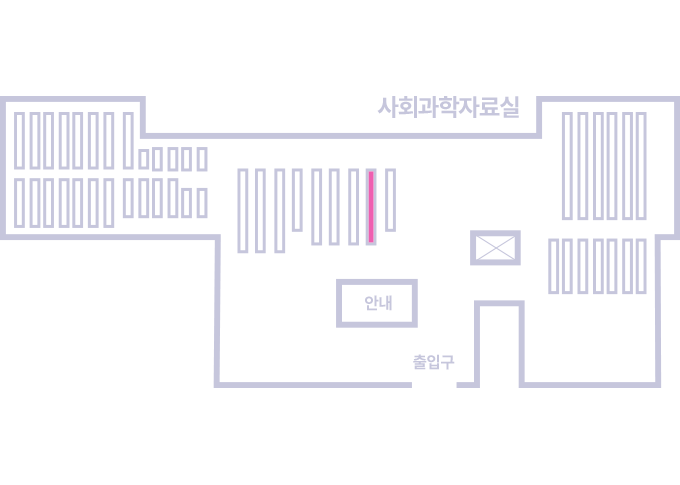
도서위치안내: / 서가번호:
우편복사 목록담기를 완료하였습니다.
*표시는 필수 입력사항입니다.
저장 되었습니다.